Most commercial and industrial boiler specifications focus on capacity, efficiency, and fuel type. The internal design of the boiler, specifically how the combustion gases travel through the heat exchanger before exiting through the flue, gets less attention in the specification conversation and more attention in the service room years later when someone is trying to understand why tubes are failing or why cleaning is taking longer than it should.
The difference between a wetback and a dryback Scotch Marine boiler, and between a three-pass and a four-pass design, has real consequences for maintenance access, heat transfer efficiency, and long-term reliability. The Hurst Series 500 four-pass wetback Scotch Marine boiler is built around design decisions that address the weaknesses of conventional dryback configurations. Understanding what those decisions are and why they matter is worth knowing before the specification is written.
What Scotch Marine means and why pass count matters
A Scotch Marine boiler is a fire tube boiler where combustion gases travel through tubes surrounded by water. The gases enter from the burner end, pass through the tubes, and exit through the flue. The number of passes is the number of times the combustion gases travel back and forth across the tube bank before exiting. Each additional pass extracts more heat from the combustion gases before they leave through the stack.
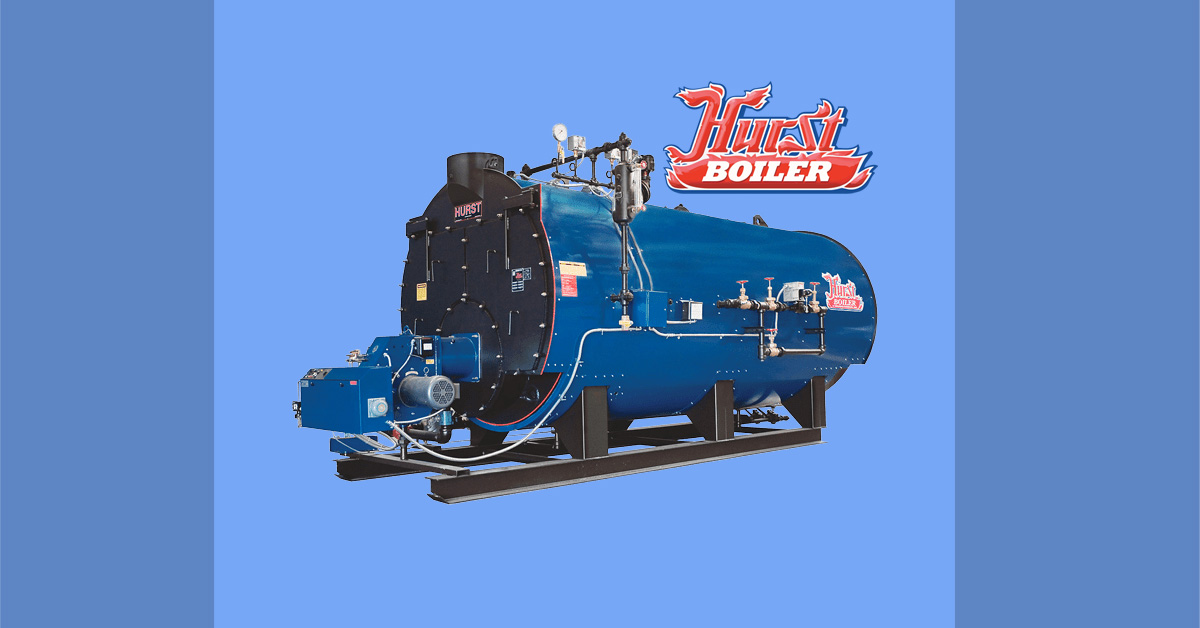
The Hurst Series 500 is a four-pass wetback Scotch Marine boiler available in capacities from 30 to 1,500 BHP, covering 1,004 to 50,213 MBH, with steam pressures from 15 to 300 PSI and hot water to 60 PSI. A four-pass design extracts more heat per unit of fuel than a two or three-pass equivalent because the combustion gases spend more time in contact with the heat transfer surface before exiting. The result is higher thermal efficiency and lower flue gas exit temperatures without requiring additional external equipment.
Bbcpump
Wetback versus dryback: the maintenance difference
This is where the design choice has the most direct impact on the facility’s experience with the boiler over its service life.
In a dryback Scotch Marine boiler, the rear smoke box that reverses the combustion gases between passes is lined with refractory material. That refractory is exposed to the full temperature of the combustion gases at every firing cycle. Over time, thermal cycling causes the refractory to crack, deteriorate, and eventually fail. When the rear refractory fails, combustion gases can bypass the heat transfer surface, reducing efficiency and in some cases allowing hot gases to contact the rear tube sheet directly, which accelerates tube sheet corrosion and tube-to-tube sheet joint failure.
Dryback boilers are subject to deteriorating rear refractory, leaking baffles, leaking door seals, and heat-stressed rear tube sheets. Refractory repairs are expensive, time-consuming, and require taking the boiler offline. In a dryback design that is the recurring cost the facility absorbs over the life of the installation.
Bbcpump
The Hurst Series 500 wetback design eliminates the rear refractory entirely. The rear combustion gas reversal chamber is water-cooled rather than refractory-lined. The water jacket around the rear chamber absorbs heat from the combustion gases and transfers it to the system rather than absorbing it into a refractory mass that has to be periodically repaired. The result is a boiler that does not have a refractory rear door to deteriorate, does not have rear baffles to leak, and does not produce heat-stressed rear tube sheets from refractory failures.
The wetback design eliminates costly deteriorating refractory rear doors and baffles between flue gas passes. For facilities where boiler availability is a priority and unplanned downtime is expensive, that design advantage accumulates over the life of the installation.
Bbcpump
Maintenance access without burner removal
One of the practical advantages of the Hurst Series 500 design that matters to service technicians and facility managers is how the boiler opens for maintenance.
The Hurst 500 Series allows one technician easy access to all tubes, and the front doors can be opened without removing any burner components or controls. In competitive designs where tube access requires removing the burner or disconnecting controls, a tube inspection that should take an hour becomes a half-day job that requires a technician with burner and controls expertise in addition to tube inspection experience. On a boiler that is being inspected annually, that difference in access time compounds over the life of the installation.
Bbcpump
Single-technician tube access also reduces the coordination complexity of planned maintenance. The service team can inspect and clean tubes without waiting for a controls or burner specialist to be available simultaneously. For facilities that schedule their own maintenance or work with a third-party maintenance contractor, that is a meaningful reduction in the labor cost and scheduling complexity of annual service.
Capacity range and application fit
The Hurst product line covers packaged boilers from 6 to 4,500 HP at pressures up to 900 PSI, spanning the full range of commercial and industrial steam applications. The Series 500 specifically covers the range from 30 to 1,500 BHP, which encompasses most commercial HVAC steam applications, institutional campus heating plants, food processing operations, light industrial process steam, and healthcare facility central plants.
Hurstboiler
The steam pressure range up to 300 PSI covers both low-pressure heating applications and medium-pressure process steam applications that require more than the 15 PSI limit of standard commercial heating boilers. For facilities that have both heating and process steam requirements, a single Series 500 unit operating at medium pressure with a pressure reducing valve on the heating distribution side can serve both loads more efficiently than separate boilers for each application.
Fuel flexibility is part of the Hurst specification value. Hurst has been manufacturing gas, oil, coal, solid waste, wood, biomass, and hybrid fuel-fired boilers since 1967. For facilities where fuel switching is a long-term consideration, whether for cost management, sustainability requirements, or supply reliability, a Hurst boiler specified for dual fuel operation provides that flexibility without requiring a future burner replacement.
Hurstboiler
Cross-system considerations
A Hurst Series 500 installation is not just a boiler. It is the heat source for a system that includes feedwater handling, steam distribution, condensate return, and in many industrial applications heat exchangers that serve process loads. The pump systems that support a Hurst installation, including boiler feed pumps, condensate return pumps, and distribution system pumps, are part of the Merion Pump Company product line. Visit merionpump.com for more on Merion’s commercial pump capabilities for steam system applications.
For facilities where the Hurst installation is part of a larger boiler room replacement or upgrade, FabPro Systems designs and fabricates packaged boiler room systems that integrate the boiler, the feedwater handling, the pump systems, and the distribution headers into a factory-assembled package. Visit fabprosystems.com for more on the packaged boiler room approach.
GP Energy Products represents Hurst Boiler across Pennsylvania, New Jersey, Delaware, and Maryland. If you have a commercial or industrial steam application and want to evaluate whether the Hurst Series 500 is the right specification for it, reach out before the drawings are finalized and we will work through the application with you.
References
1. Hurst Boiler and Welding Company. Series 500 Four-Pass Wetback Scotch Marine Boiler product specifications. hurstboiler.com/boilers/scotch_marine/series_500
2. Hurst Boiler and Welding Company. Product line overview including capacity range, fuel types, and ancillary equipment. hurstboiler.com
3. ASME. Boiler and Pressure Vessel Code, Section I. Governs design and fabrication standards for power boilers including Scotch Marine fire tube designs. asme.org
4. NFPA 85. Boiler and Combustion Systems Hazards Code. Covers safety requirements for commercial and industrial boiler installations. nfpa.org