
The boiler control system is the part of the boiler room that nobody thinks about until it stops working correctly. The boiler fires, the building gets heat, and the controls are background infrastructure that earns no attention as long as the system behaves. When something goes wrong with the controls, the symptoms are often attributed to the boiler, the burner, or the fuel supply before anyone looks at the control system itself. By the time the controls are correctly identified as the problem, the facility has often already been through an unnecessary service cycle looking for something that was not there.
Understanding what boiler controls actually do, how they fail, and what a modern control system looks like is the kind of knowledge that changes how quickly problems get diagnosed and how well the controls upgrade conversation goes when the existing system reaches the end of its useful life.
What the boiler control system does
The boiler control system manages three things simultaneously: safety, combustion, and system integration.
Safety controls are the foundation. They monitor the conditions under which the boiler can safely operate and shut the boiler down when any of those conditions are violated. High limit controls, low water cutoffs, flame safeguard controls, operating pressure and temperature limits, and proof of closure on fuel valves are all safety functions. These controls are governed by ASME, NFPA, and insurance underwriter requirements, and their correct operation is not optional. A safety control that fails in a way that prevents the boiler from operating is a nuisance. One that fails in a way that allows the boiler to continue operating outside safe limits is a hazard.
Combustion controls manage the burner firing rate, the fuel-to-air ratio, and the modulation of the boiler output to match the load. On older systems, combustion controls may be pneumatic or simple on-off controls that fire the boiler at a fixed rate and cycle on and off to maintain temperature or pressure. On modern systems, digital combustion controls adjust the firing rate continuously across a modulation range, maintain precise fuel-to-air ratios across that range, and optimize combustion efficiency in real time. The difference in fuel consumption between a properly functioning modern modulating control system and an aging on-off system on a boiler that runs year-round is measurable in the operating budget.
System integration controls manage the boiler’s interaction with the distribution system, other boilers in a multi-boiler plant, and the building automation system. Sequencing controls determine which boiler fires first and how additional boilers are staged on as load increases. Building automation integration allows the boiler plant to respond to signals from the BAS rather than operating on a fixed schedule. Lead-lag controls rotate the lead boiler to equalize runtime across units in a multi-boiler system.
How boiler controls fail
Control system failures in commercial and industrial boiler rooms fall into two categories: hard failures and soft failures.
Hard failures are the ones that take the boiler offline. The flame safeguard locks out. The low water cutoff trips. The high limit opens and stays open. These failures are visible, they produce an error code or a tripped indicator, and they initiate a service call. They are also the failures that are most likely to be diagnosed correctly because they announce themselves.
Soft failures are more insidious. A modulating control that has drifted out of calibration fires the burner at the wrong rate for the load, consuming more fuel than the system requires without triggering any alarm or error condition. A combustion trim control that is no longer reading oxygen or CO2 levels correctly maintains a fuel-to-air ratio that was correct at installation but is no longer optimized for the current burner and fuel conditions. A sequencing control that is cycling boilers incorrectly produces uneven wear across the boiler plant without any single boiler showing a problem.
Soft failures accumulate over time. The boiler plant that was efficient five years ago gradually becomes less efficient as calibration drifts, sensors degrade, and control logic that was appropriate for the original equipment becomes less appropriate as components are replaced and conditions change. The facility continues paying for the degradation in every fuel bill without knowing the controls system is the cause.
Signs that the control system needs attention
Several symptoms suggest a controls assessment is warranted before something fails outright.
Boiler cycling more frequently than expected. A boiler that is short cycling, firing and shutting down on short intervals, is often responding to a control system that is not correctly matching the firing rate to the load. Short cycling increases wear on the burner and boiler refractory and reduces efficiency.
Inconsistent temperature or pressure at the distribution system. If the supply temperature or pressure varies more than expected under consistent load conditions, the modulating control may not be maintaining setpoint correctly.
Nuisance lockouts that reset without identifying a root cause. A flame safeguard that trips occasionally and resets without a clear cause may be responding to a combustion condition that the control system is not managing correctly, or to sensor degradation that produces intermittent false signals.
Error codes or fault histories that have not been reviewed. Modern control systems log fault histories that reveal patterns invisible to casual observation. A controls assessment that includes a review of the fault log often identifies developing problems before they become hard failures.
What modern boiler control systems look like
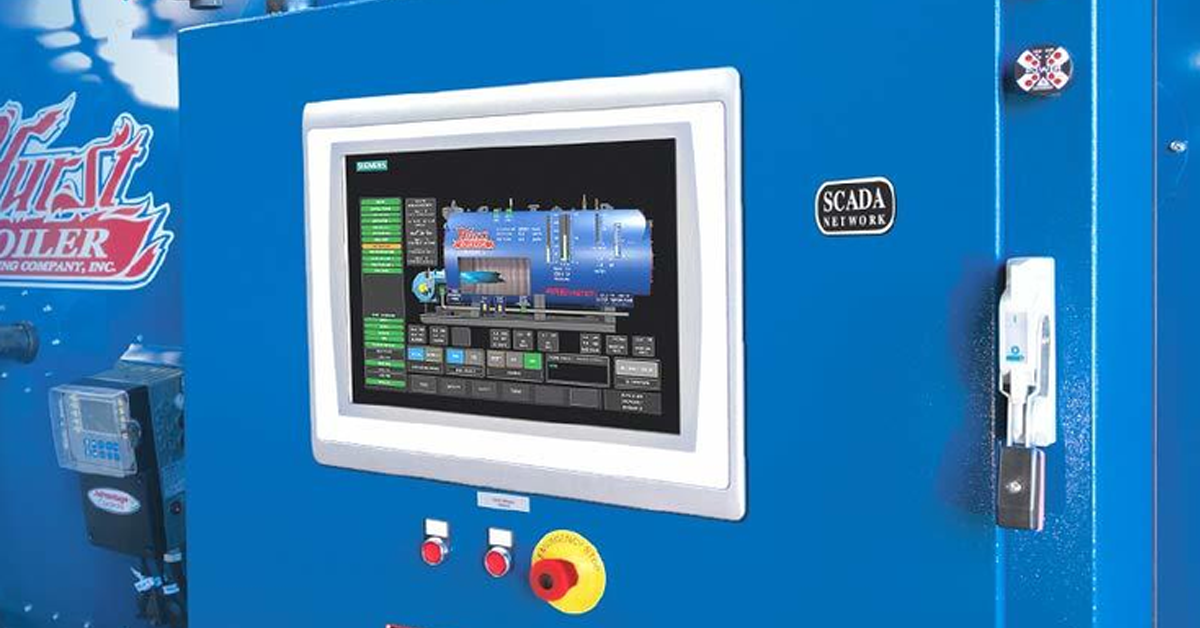
The gap between a legacy pneumatic or relay-based control system installed 20 or 30 years ago and a current digital boiler control system is significant. Modern systems offer several capabilities that older systems cannot match.
Full modulation with parallel positioning. Modern burner management systems control the fuel valve and the combustion air damper independently and simultaneously, maintaining precise fuel-to-air ratios across the full modulation range of the burner. This produces efficiency gains across the entire operating range, not just at design conditions.
Oxygen trim. An oxygen trim system uses a flue gas sensor to measure actual oxygen content and adjust the combustion air in real time to maintain the target excess air level as fuel quality, ambient conditions, and burner wear change over time. Oxygen trim can recover efficiency losses that develop gradually as the combustion system ages.
Boiler sequencing and building automation integration. Modern sequencing controls optimize which boiler fires and at what rate based on the actual load, the efficiency characteristics of each boiler, and the runtime equalization across the plant. Integration with the building automation system allows the boiler plant to receive setpoint adjustments and operating schedules from the BAS rather than running on independent fixed controls.
Remote monitoring and diagnostics. Current control systems can transmit operating data, fault logs, and performance metrics to remote monitoring platforms that allow the service team to identify developing problems before they cause failures. For facilities where boiler availability is critical, remote monitoring changes the service model from reactive to proactive.
When a controls assessment makes sense
A controls assessment is warranted any time the boiler plant shows the symptoms described above, when the control system is more than 15 years old, when a boiler or burner replacement is being planned and the existing controls may not be compatible with the new equipment, or when the facility is implementing a building automation system upgrade that needs to integrate with the boiler plant.
GP Energy Products works with engineers and facility managers across Pennsylvania, New Jersey, Delaware, and Maryland on commercial and industrial boiler applications including controls assessments and upgrades. For facilities where the controls upgrade is part of a broader boiler room modernization that includes pump system updates, the Merion Pump Company team handles the pump and hydronic system side of that conversation. Visit merionpump.com for more on Merion’s commercial pump capabilities.
Reach out to the GP Energy team before the control system fails and we will assess what the existing system is doing, what a modern replacement would provide, and what the upgrade path looks like for your specific equipment.
References
1. NFPA 85. Boiler and Combustion Systems Hazards Code. Covers safety control requirements for boilers including flame safeguard, low water cutoff, and pressure limit controls. nfpa.org
2. ASME CSD-1. Controls and Safety Devices for Automatically Fired Boilers. Governs the design, installation, and testing of boiler safety controls. asme.org
3. ABMA. Boiler Room Guide. Covers combustion controls, sequencing, and building automation integration for commercial and industrial boiler plants. abma.memberclicks.net
4. ASHRAE. HVAC Systems and Equipment Handbook, Chapter on Boilers. Covers control system types, combustion management, and building automation integration. ashrae.org
All technical claims are consistent with the standards listed above. Confirm application-specific control requirements with your boiler manufacturer and authority having jurisdiction before finalizing any controls upgrade specification.