
When a commercial or industrial boiler stops working, the facility stops working with it. No heat. No hot water. In process applications, no production. The clock starts running the moment the boiler goes down, and every hour of downtime has a cost that compounds as the temperature drops or the production line sits idle.
GP Energy Products provides boiler service and repair for commercial and industrial facilities across Pennsylvania, New Jersey, Delaware, and Maryland. This article covers what the service process looks like, what information helps the service team respond faster, and what facility managers and plant engineers can do before a service call is needed to make sure the response is as efficient as possible when it is.
What commercial boiler service covers
Commercial and industrial boiler service covers a range of work from routine maintenance to emergency repair. Understanding the difference helps set expectations before the service team arrives.
Routine maintenance includes annual burner tune-ups, combustion analysis and adjustment, safety control testing and documentation, heat transfer surface inspection, water treatment review, and operational testing of all safety devices. Routine maintenance is the work that prevents emergency repairs. A boiler that receives consistent annual maintenance is less likely to fail at an inconvenient time and more likely to perform efficiently across its full service life.
Diagnostic service is the work that happens when something is not performing correctly but the boiler has not failed outright. Short cycling, inconsistent pressure or temperature, elevated fuel consumption, nuisance lockouts, combustion instability. Diagnostic service identifies the root cause and corrects it before it becomes a hard failure.
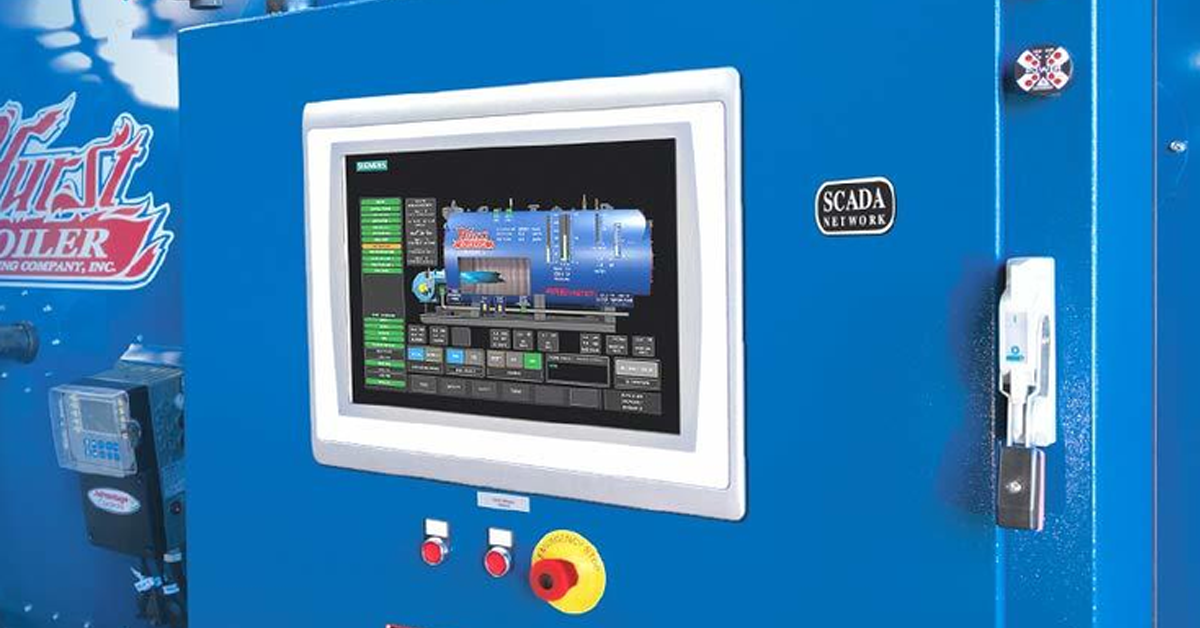
Emergency repair is the work that happens when the boiler is down and the facility needs it back online. Emergency repair requires rapid diagnosis, parts availability, and the technical experience to work on a wide range of equipment under time pressure. The quality of an emergency repair depends significantly on how much information the service team has before they arrive on site.
What helps the service team respond faster
The single most important thing a facility manager can do before calling for emergency boiler service is gather the equipment information. A service team that arrives knowing what they are working on responds faster than one that spends the first hour identifying the equipment.
The information that helps most: the boiler manufacturer and model number, which is typically on the nameplate on the front or side of the boiler. The burner manufacturer and model number, which is on the burner itself. The boiler’s rated capacity in BHP or MBH and its operating pressure. The fuel type. The age of the equipment. Any error codes or fault indicators that are displayed on the control panel. The history of recent service work if it is available.
With that information, the service team can confirm parts availability before they arrive on site, identify whether any known issues with that equipment model are relevant to the symptoms, and arrive prepared for what they are likely to find rather than discovering it on arrival.
What to have ready when the service team arrives
Beyond the equipment information, several site conditions affect how quickly the service team can work.
Access to the boiler room. The service team needs unobstructed access to the boiler, the burner, the control panel, and the utility connections. A boiler room that has become a storage area over time may require clearing before service work can begin.
Water supply and drain access. Many boiler service procedures require the ability to add water to the system or drain a portion of it. Knowing where the water supply and drain connections are before the service team arrives saves time.
Fuel shutoff location. The service team needs to be able to isolate the fuel supply to the boiler quickly if required. The facility contact should know where the gas meter shutoff or fuel oil supply valve is located.
Electrical disconnect location. For electrical troubleshooting, the service team needs to know which circuit breaker or disconnect switch controls the boiler. This is often not clearly labeled in older facilities.
Previous service records. If previous service records are available, they give the service team context for the boiler’s history, any known issues, and any repairs that have been made previously.
Planned service versus emergency service
The difference between planned maintenance service and emergency repair service is significant in terms of cost, disruption, and outcome. A boiler that receives planned annual maintenance is less likely to fail at an inconvenient time, and when repairs are needed they are more likely to be identified and scheduled before they become emergencies.
The best time to schedule annual maintenance is during the off-season, typically late spring or summer, when the boiler is not carrying a heating load and can be taken offline for the time required to perform a thorough inspection and tune-up. The same maintenance performed in January when the building is depending on the boiler for heat takes more time, creates more disruption, and carries a higher cost because the boiler cannot be taken offline as easily.
For facilities managing a central steam plant or a large boiler room installation, GP Energy recommends a pre-season inspection before heating season begins each year. A pre-season inspection identifies deferred maintenance items, confirms that safety controls are functioning correctly, and verifies that the boiler plant is ready for the demand it will face in the coming heating season.
Service territory
GP Energy Products provides boiler service and repair across Pennsylvania, New Jersey, Delaware, and Maryland. The service area covers commercial and industrial facilities from the Philadelphia region across the full four-state territory, including manufacturing facilities, institutional campuses, healthcare facilities, food processing operations, and commercial buildings of all types.
For facilities where a boiler service event also involves pump system issues, the Merion Pump Company team handles pump service and repair across the same region. Visit merionpump.com for more on Merion’s pump service capabilities.
If you have a boiler that needs service, a maintenance program that needs to be established, or a facility that has deferred boiler maintenance and wants to get ahead of it before heating season, reach out to the GP Energy team. We serve the full four-state region and we will respond.
References
1. ASME. Boiler and Pressure Vessel Code, Section I and Section VII. Governs boiler design, fabrication, and inspection requirements applicable to commercial and industrial boilers in service. asme.org
2. NFPA 85. Boiler and Combustion Systems Hazards Code. Covers safety requirements for boiler operation, maintenance, and repair. nfpa.org
3. ASME CSD-1. Controls and Safety Devices for Automatically Fired Boilers. Governs the testing and maintenance of boiler safety controls. asme.org
4. National Board of Boiler and Pressure Vessel Inspectors. Governs boiler inspection requirements by state including Pennsylvania, New Jersey, Delaware, and Maryland. nationalboard.org
All service work on commercial and industrial boilers should be performed by qualified technicians in accordance with the manufacturer’s service documentation and applicable state and local codes.