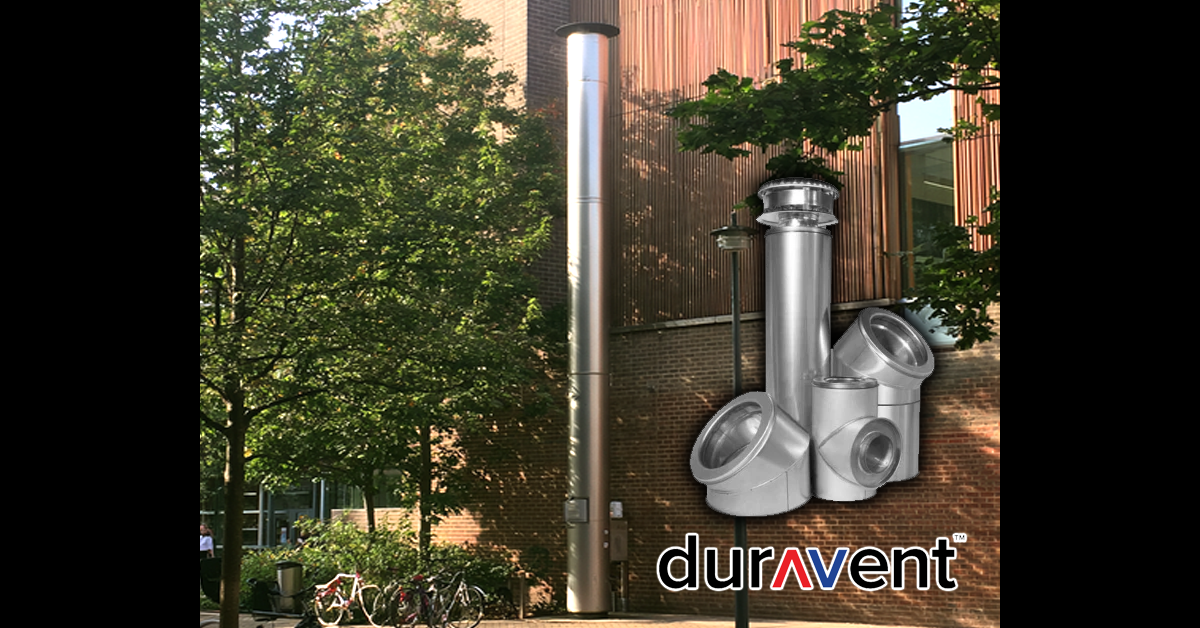
When a boiler is replaced, the conversation usually focuses on the boiler: capacity, efficiency, controls, and price. The vent gets treated as a detail to sort out later. That is where replacement projects run into trouble. A new boiler can have very different venting requirements than the one it replaces, and discovering that after the equipment is ordered can add cost and time.
Why a new boiler may need a different vent
Older atmospheric and natural draft boilers send hot flue gas up a chimney, and the chimney was built for that. Higher-efficiency boilers pull more heat out of the flue gas. The gas that leaves the boiler is cooler, and in condensing boilers it is cool enough that water vapor condenses inside the vent. That condensate is acidic, and the original masonry chimney or standard vent was never designed for it.
Many modern boilers also run forced draft and push flue gas out under positive pressure. A positive pressure vent has to be sealed so gas does not leak into the mechanical room or the building.
Match the vent to the boiler
The boiler manufacturer specifies the venting requirements for each model: the vent category, the allowed materials, the maximum flue gas temperature, the pressure the vent must handle, and the allowed length and number of elbows. Those requirements come first. Everything else follows from them.
In general, venting for condensing and positive pressure boilers is built from corrosion resistant, sealed, listed components. Stainless steel and polypropylene systems are both used, and each has its own temperature limits and installation rules. Check the maximum flue gas temperature the boiler can produce against the temperature rating of the vent material before choosing one.
Questions to settle before ordering
Where does the vent terminate, and are the clearances to doors, windows, and air intakes met? How long is the run, and how many elbows are there? Pressure drop from long runs can limit the boiler. How will condensate be drained and neutralized? Is the existing chimney being reused or relined, and is it in good condition? Where does combustion air come from, and is the opening sized for it? If several boilers share a vent, is the design correct for the combination?
None of these are difficult questions. They are far easier to answer on paper than on the roof.
Plan the venting with the boiler
The best time to plan venting is when the boiler is selected. A choice made then can avoid a vent that does not fit, a termination that does not meet clearance, or a long lead time on the one component the project is waiting for. Lead times on venting components vary, so ask early when the schedule is tight.
For pump maintenance ahead of peak heating load, Merion Pump Company covers pump seals and bearings in today’s article. Visit merionpump.com for more. For coils in variable flow systems, HX Coils covers that in today’s article. Visit hxcoils.com for more. For a look at how a heat transfer skid gets built, FabPro Systems covers that in today’s article. Visit fabprosystems.com for more.
References
1. DuraVent. PolyPro Venting Systems brochure, including exhaust temperature limits, ULC S636 listing, and condensate management. duravent.com/literature/DV_PP_BR-001E_02-23.pdf
2. National Fire Protection Association. NFPA 54, National Fuel Gas Code (venting of gas appliances). nfpa.org
3. Boiler manufacturer installation and operation manuals for the specific model, which set the required vent category, material, maximum flue gas temperature, and allowed vent length.